
OUR RECKONING: WHY REPUBLICANS LOST AND HOW WE MUST WIN AGAIN.
A Painful Assessment from Within
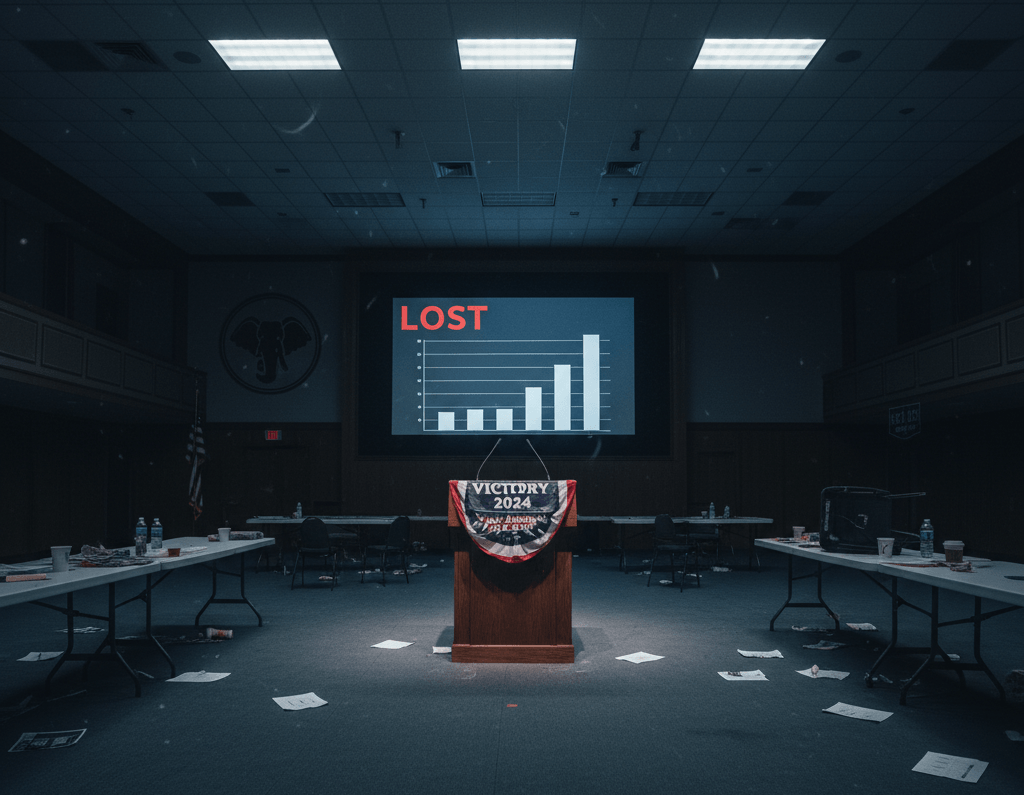
As a Republican who has watched our party ascend to historic heights and endure devastating lows, Tuesday’s election results demand an honest reckoning. The outcomes in Virginia, New Jersey, New York City, and California weren't just Democratic victories; they were clarion warnings that our party, unless it transforms itself fundamentally, faces potential irrelevance in the 2026 midterms and beyond.
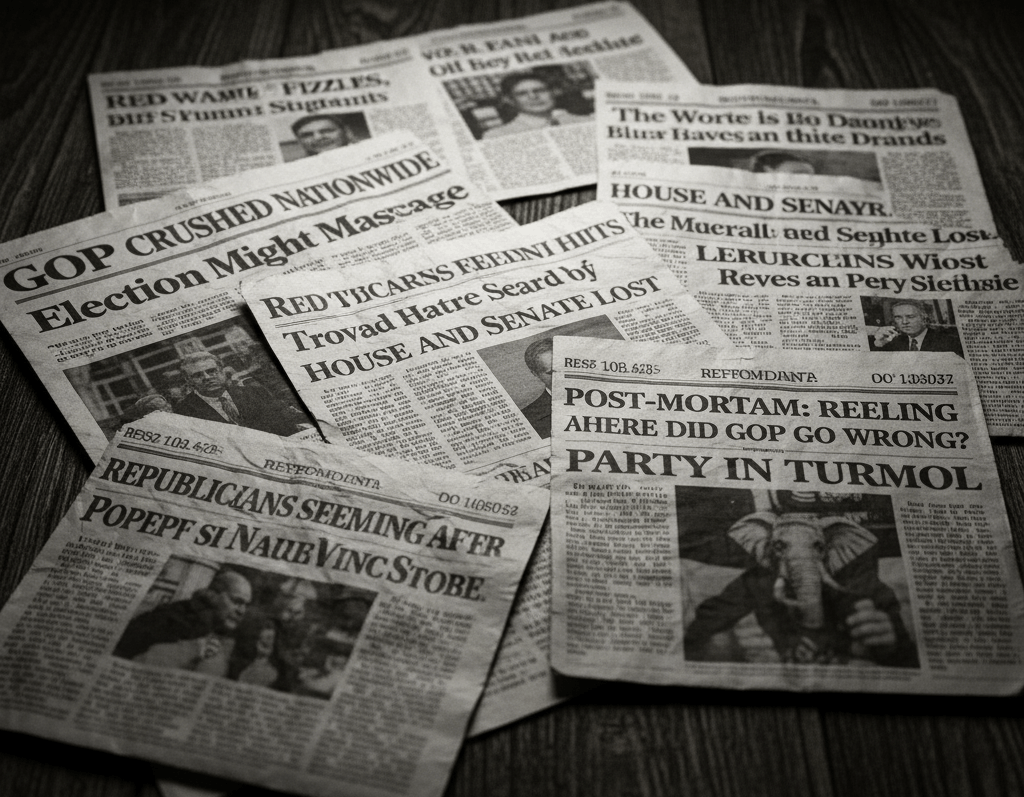
Let me be blunt: we got shellacked. Abigail Spanberger’s 15-point victory over Lieutenant Governor Winsome Earle-Sears in Virginia, Mikie Sherrill's 13-point rout of Jack Ciattarelli in New Jersey, and the election of an avowed democratic socialist as New York City’s mayor represent more than off-year aberrations. They signal that suburban voters, the swing constituency that determines electoral majorities, have rejected our message, our messengers, and our governance.
President Trump posted that “pollsters” attributed our losses to the government shutdown and his absence from the ballot. While there’s truth to both factors, this explanation offers cold comfort. If our party can only win when Trump personally appears on the ballot, what kind of sustainable political movement have we built? And if a government shutdown, undertaken to advance our policy agenda, costs us elections, what does that say about voters’ confidence in our governing competence?
The harder truth we must confront: we are losing precisely the voters we need most. Suburban families concerned about affordability, healthcare, and education increasingly view Republicans as out of touch, captive to ideological extremes, and incapable of pragmatic governance. Our Latino support, once a bright spot in 2024, showed erosion in Tuesday’s contests. Turnout among our base disappointed, revealing an uncomfortable reality: certain voters participate only when Trump himself campaigns, not for down-ballot Republicans carrying his banner.
Historical Lessons: When Parties Fail to Adapt
Our predicament echoes the most cautionary tales in American political history. The Whig Party of the 1850s, a once-dominant coalition uniting diverse regional and economic interests, collapsed when internal factionalism over slavery expansion rendered it incoherent. Pro-compromise Whigs found more common cause with compromise-minded Democrats than with their own anti-slavery colleagues. By 1855, Senator William Henry Seward delivered the party’s eulogy: “Let the Whig party pass. It committed a grievous fault, and grievously hath it answered it.”
Are we Republicans of 2025 repeating this tragic pattern? Our party increasingly fractures between populist-nationalists and traditional conservatives, between Trump loyalists demanding absolute fealty and pragmatists seeking broader coalitions. As GOP strategist Whit Ayres observed, “January 6th was the opening battle in the war for the soul of the Republican Party,” a war between the “governing faction” focused on practical solutions and the “populist faction” animated by cultural grievances and institutional distrust.
If we cannot bridge these divides, if we prioritize purity tests over electoral viability, we risk the Whigs' fate: dissolution into historical footnotes while a new coalition rises to replace us.
Yet history also offers redemption stories. Our own party emerged from the Whigs’ ashes through “strategic fusion,” anti-slavery activists from multiple parties uniting around shared moral purpose. As one organizer declared, “We went into the little meeting of Whigs, Free Soilers and Democrats. We came out of it Republicans.” This patient coalition-building, rooted in principle rather than personality, enabled rapid ascension.
Similarly, when Democrats faced wilderness years during the 1920s Republican dominance, they rebuilt through Franklin Roosevelt’s New Deal coalition, uniting urban workers, rural farmers, intellectuals, and ethnic minorities around activist government addressing economic desperation. Roosevelt’s first inaugural captured transformative ambition: “This great nation will endure as it has endured, will revive and will prosper.”
The question before Republicans today: can we summon equivalent vision and discipline to rebuild our coalition for contemporary challenges?
WHAT WENT WRONG: AN HONEST DIAGNOSIS
Economic Messaging Failure
We campaigned on affordability and cost of living, issues that should favor Republicans given inflation's persistence. Yet, voters rejected our prescription. NBC polling shows 61% of Americans report their family income failing to keep pace with expenses, with Trump’s economic approval at just 33%, his lowest level. Democratic candidates like Spanberger and Sherrill successfully portrayed Republican governance as benefiting the wealthy while ignoring working families’ struggles.
The uncomfortable reality: voters don’t trust our economic stewardship. They see the shutdown, which Trump championed, as reckless brinkmanship endangering food assistance, healthcare subsidies, and essential services. They hear our tax cut proposals and suspect they’ll primarily benefit corporations and high earners, not middle-class families.
We cannot simply blame “liberal media bias” for this perception. If our policies genuinely helped working Americans, we should be able to demonstrate it. That we struggle suggests either policy inadequacy or communication failure, probably both.
Suburban Erosion
Virginia and New Jersey once represented Republican suburban strongholds. Today, college-educated suburban voters, particularly women, increasingly view our party with suspicion or hostility. They prioritize education quality, healthcare access, environmental protection, and social tolerance, issues where Democrats have seized the initiative, while we have emphasized cultural grievances and institutional confrontation.
Spanberger’s campaign theme, “pragmatism over partisanship,” resonated precisely because suburban voters perceive Republicans as reflexively partisan, prioritizing loyalty to Trump over
problem-solving. When our Virginia nominee declared Trump “right about everything,” swing voters heard ideological rigidity, not principled conservatism.
Redistricting Vulnerabilities
California’s Proposition 50 victory represents Democrats’ determination to match our aggressive redistricting efforts in Texas, Missouri, and Ohio. While we’ve successfully redrawn maps, creating five new GOP-leaning Texas districts and additional seats elsewhere, Democrats’ willingness to respond in kind, backed by anti-Trump voter mobilization, threatens to neutralize these gains.
More troubling: several Republican-controlled states, Indiana, Kansas, Nebraska, and New Hampshire, resisted administration pressure for aggressive gerrymandering, citing insufficient legislative votes or gubernatorial opposition. This suggests limits to our redistricting strategy and internal party divisions over tactical extremism.
The Trump Factor
Here’s where honest assessment becomes most uncomfortable for many Republicans: President Trump’s second-term performance is dragging down our candidates. His 37% approval rating in CNN polling, combined with majorities believing the country is on the wrong track, creates headwinds no amount of candidate quality can overcome.
The government shutdown, now the longest in American history, exemplifies the problem. Trump demanded Republicans “TERMINATE THE FILIBUSTER” and pass his agenda unilaterally, prioritizing speed over consensus. Voters responded by punishing our candidates at the ballot box.
I say this as someone who voted for Trump twice and appreciates his judicial appointments, regulatory reforms, and challenges to establishment complacency: personality-driven politics yields
diminishing returns. Voters who enthusiastically support Trump himself often prove unwilling to extend that support to candidates merely aligned with him. We have built a movement dependent on one man’s charisma rather than durable institutional strength and policy achievements.

THE PATH FORWARD: A REPUBLICAN RENEWAL AGENDA
If we are to have any chance in the 2026 midterms, when historical patterns strongly favor the opposition party, Republicans must undertake comprehensive strategic, organizational, and philosophical renewal. The following represents a roadmap for revival:
Rebuild Our Coalition by Broadening Appeal
The Challenge: The Republican Party has become overly dependent on aging, rural, white voters, a demographically declining coalition.
The Solution: Construct what Theodore Roosevelt called a “square deal” coalition reaching suburban families, younger voters, minorities, and independents with policies addressing tangible concerns.
Specific Actions:
Economic Pragmatism: Champion middle-class tax relief, affordable childcare, healthcare cost controls, and infrastructure investments delivering visible benefits. Eisenhower’s interstate highway system and Reagan’s bipartisan Social Security reforms show how infrastructure and entitlement stewardship build cross-partisan support.
Suburban Outreach: Establish permanent field offices in competitive suburban districts, hosting regular town halls and community service events demonstrating commitment beyond election cycles. Listen to suburban voters’ concerns about education, healthcare, and the environment, then craft conservative solutions addressing those priorities rather than dismissing them as “liberal issues.”
Minority Engagement: Move beyond symbolic outreach to substantive policies addressing minority communities’ priorities, criminal justice reform, educational opportunity, and entrepreneurship support. We cannot write off entire demographic groups and expect electoral majorities.
Youth Mobilization: Embrace digital-native campaigning and policy positions resonating with younger voters, climate pragmatism (not denial), student debt relief, and housing affordability. Democrats’ success in mobilizing young voters through candidates like Zohran Mamdani shows the power of meeting voters where they live digitally.
Historical Precedent: Reagan’s 1984 landslide united traditional Republicans, “Reagan Democrats,” evangelicals, and blue-collar workers through optimistic messaging about American renewal, “Morning in America,” transcending narrow partisan appeals. We must recapture that inclusive vision.
RESTORE PARTY UNITY AND GOVERNING COMPETENCE
The Challenge: Internal warfare between Trump loyalists and traditional conservatives, combined with repeated governance failures (shutdowns, policy chaos), undermines voter confidence.
The Solution: Establish institutional mechanisms prioritizing unity without demanding uniformity, while demonstrating basic governing competence.
Specific Actions:
End the Shutdown Immediately: Every day this continues costs us political capital and validates Democratic attacks on our governing competence. Senate Republicans should negotiate a face-saving compromise ending the standoff, even if it requires concessions. Governing means making difficult choices, not ideological grandstanding.
Leadership Consolidation: Convene regular meetings of party elders, former presidents, congressional leaders, governors, with rising stars to forge common principles and strategic priorities. Create policy task forces allowing diverse perspectives while demanding coherent final platforms.
Primary Process Discipline: Party leadership should intervene earlier in contentious primaries, endorsing candidates with the broadest appeal and discouraging destructive intra-party attacks. As reported, Republicans in 2026 are “dedicated to avoiding contentious primaries,” with national committees “steering candidates in key toss-up races.” We must follow through on this commitment.
Messaging Discipline: Institute a centralized rapid-response system to ensure consistent communication across candidates and geographies. Democrats spent $18 million in ads referencing Trump in Virginia and New Jersey alone. We need a discipline that emphasizes policy achievements and a future-oriented vision.
Historical Precedent: Lincoln’s “Team of Rivals” approach, appointing political opponents to his cabinet, demonstrated that unity of purpose matters more than uniformity of background. Calvin Coolidge warned, “Unless those who are elected under the same party designation exhibit sufficient loyalty and coherence, there is no representation of the popular will.” We must embody this principle.

WIN THE GROUND GAME THROUGH RELENTLESS ORGANIZING
The Challenge: Democrats consistently out-mobilize us through superior grassroots operations, year-round organizing, and sophisticated data targeting.
The Solution: Build permanent organizing infrastructure matching Democrats’ intensity and sophistication.
Specific Actions:
Year-Round Organizing: Abandon boom-bust cycles of intense pre-election activity followed by dormancy. Establish permanent field offices, hire full-time organizers, and maintain continuous voter contact.
Relational Organizing: Train supporters to activate personal networks, friends, family, coworkers, neighbors, using “peer-to-peer” persuasion techniques. As organizing experts advise, “Tap into networks of existing supporters to make new connections and expand your campaign's reach.”
Digital Integration: Combine traditional door-knocking with sophisticated digital tools, voter databases, microtargeting, text banking, and social media mobilization. Our fundraising success demonstrates donor enthusiasm; channel this into field operations.
Community Embeddedness: Partner with local civic organizations, churches, veterans groups, small business associations, and institutions trusted by target voters. Host educational seminars, town halls, service projects, and build relationships beyond transactional vote-seeking.
Turnout Infrastructure: Address our historical weakness in off-presidential elections by building absentee ballot programs, early voting operations, and election day transportation systems.
On Redistricting: While continuing legally defensible map-drawing in states we control, we should avoid overreach that triggers backlash or legal defeat. Focus on creating compact, competitive districts favoring Republicans without obviously discriminatory intent. And publicly advocate for national redistricting standards ending both parties' gerrymandering, a position that polls well with voters disgusted by partisan manipulation.

OUR CHOICE: RENEWAL OR IRRELEVANCE
I write this not as someone rooting for Republican failure but as a conservative who understands that parties must earn electoral majorities through persuasion, organization, and demonstrated governing competence. We cannot simply blame “biased media,” “liberal elites,” or “rigged systems” for our
failures. Voters delivered a verdict Tuesday, and we must respect it by addressing the deficiencies they identified.
Sarah Longwell, a Republican strategist, recently observed: “I wish for a healthy Republican party, because we don’t have one right now. I think we need at least two healthy political parties in this country. What I hope for in the short term is that the Republican party endures sustained electoral defeats so that it has an incentive to change.”
As painful as that assessment is, she speaks the truth. Sometimes parties require electoral shocks to catalyze necessary reform. The 2025 results represent such a shock. The question now: will we heed the warning and transform ourselves, or will we double down on strategies leading to defeat?
Winston Churchill famously observed, “Some men change their party for the sake of their principles; others their principles for the sake of their party.” I'm not advocating we abandon conservative principles, limited government, individual liberty, free enterprise, and strong national defense. Rather, ‘''m arguing we must apply those principles to contemporary challenges in ways that persuade rather than alienate modern voters.
Theodore Roosevelt warned, “A great democracy has got to be progressive, or it will soon cease to be either great or a democracy.” By “progressive,” Roosevelt meant forward-looking, adaptable, responsive to changing conditions, not ideologically liberal. Republicans must become “progressive” in Roosevelt's sense: willing to evolve our approaches while preserving core values.
Abraham Lincoln’s counsel from 1862 applies perfectly to Republicans in 2025: “The dogmas of the quiet past are inadequate to the stormy present. The occasion is piled high with difficulty, and we must rise with the occasion. As our case is new, so we must think anew, and act anew.”
John F. Kennedy added, “Change is the law of life. And those who look only to the past or present are certain to miss the future.”

HISTORY’S JUDGMENT AWAITS
The 2025 elections have issued Republicans an unmistakable challenge: transform or perish. We can continue down our current path, personality-driven politics, narrow demographic appeal, and governance by confrontation, and watch Democrats consolidate power for a generation. Or we can undertake the difficult work of renewal: broadening our coalition, restoring governing competence, and building permanent organizing infrastructure rivaling our opponents.
History will judge our response. The Whigs chose rigidity and collapsed. The Republican Party of the 1850s chose strategic fusion and rose to dominance. FDR’s Democrats chose bold
experimentation and governed for decades. Reagan’s Republicans chose optimistic inclusion and won landslides.
Which path will we choose? The 2026 midterms approach rapidly. Voters are watching, waiting to see if we have learned Tuesday’s lessons or dismissed them as aberrations.
As a Republican who believes our principles, properly applied, offer Americans the best path to prosperity, security, and freedom, I pray we choose renewal. Our country deserves two healthy parties competing to solve problems, not one party governing by default while the other indulges in recrimination and nostalgia.
The work begins now. Not tomorrow. Not after more defeats. Now.
Our party’s future, and our nation’s well-being, depend on it.

Oliver N.E. Kellman, Jr., J.D. Managing Partner & Executive Managing Director
“The 2025 elections have issued Republicans an unmistakable challenge: transform or perish. The work begins now. Not tomorrow. Not after more defeats. Now.”— Oliver N.E. Kellman, Jr., J.D.
Follow me
ABOUT
Created with © systeme.io


